


Many people choosing a vaporizer look at the design, the battery, and the price, and nothing more. The actual heating method, which happens to be the beating heart of the device, is often overlooked. But the heating design in a vaporizer does more to shape flavor, efficiency, and how a session actually feels than any of the aforementioned features.
There are three types to choose from: conduction, which heats by direct contact with a hot surface, and convection, which heats by passing hot air through the chamber. Hybrid, as you probably guessed, uses a combination of both.
In short, conduction is fast and compact, convection is cleaner and more even, and hybrid is somewhere in the middle.
You are probably here looking for a comparison of conduction vs. convection vaporizers, and it is a real decision to make if you are buying a vaporizer for the first time, although there is no universal, definitive answer. It really comes down to what you want most from your device: speed, flavor, portability, or a bit of both.
This guide covers how the three main types of vaporizer heating methods work and which one might suit you best. It's not a comprehensive, overly detailed guide covering the finer points of conduction vs convection vaporizers, because you probably don't need that.
But if you just want a quick overview, you should find clarity in this short but useful guide.
| ℹ️ New to vaporizers? Our guide on how a vaporizer works covers the fundamentals, including heating methods. |
Key Points
- Conduction heats through direct contact with a hot surface: fast heat-up, compact, beginner-friendly.
- Convection heats with hot air through the material: more even, purer flavor, but slower and usually larger.
- Hybrid heating combines both for a fast start and an even finish, at a slightly higher price and complexity.
- Norddampf's RELiCT uses conduction; the HAMMAH and VOITY use hybrid heating.
- No single technology is objectively best. The right choice depends on your priorities: speed, flavor, portability, or budget.
How Conduction Works
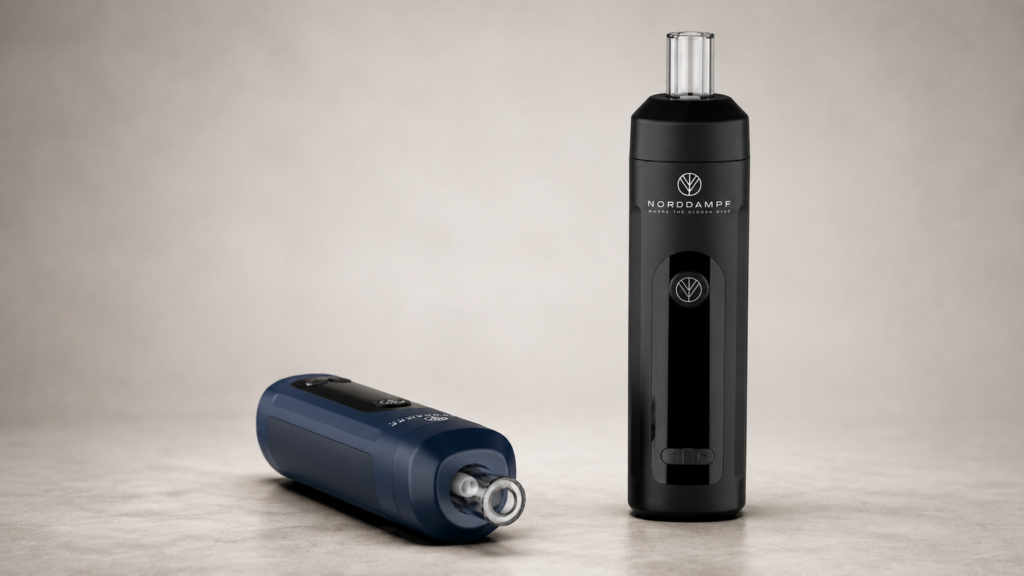
Conduction is the direct transfer of heat through physical contact. In a conduction vaporizer, the herb sits directly in a heated chamber, usually made of ceramic or stainless steel, and heat is transferred directly from the chamber wall into the material.
You might think of a spoon warming in hot soup: the heat travels, or spreads, through direct contact.
Its biggest advantages are speed and intensity. Because the element only has to heat itself and not a stream of air, most conduction vaporizers reach temperature in 30–60 seconds, and the direct contact with the chamber wall provides fast, intensive extraction with strong vapor production.
That simpler design brings a few other perks:
Fast heat-up (30–60 seconds), so it suits spontaneous, on-the-go use
Strong, intensive vapor production, thanks to direct contact with the heated chamber
Compact and portable, thanks to the simpler internals
Energy-efficient, which tends to mean more sessions per charge
Often cheaper, making it a natural entry point for newcomers
The main tradeoff is even heating in simpler designs. Without stirring, basic conduction devices can develop hot spots, where the material against the chamber wall over-extracts while the rest lags behind, and that direct contact can also lend a faintly toasted note at higher temperatures.
Well-designed conduction systems, though, can achieve very even heating, and both effects are further mitigated by a well-built chamber and a lower starting temperature.
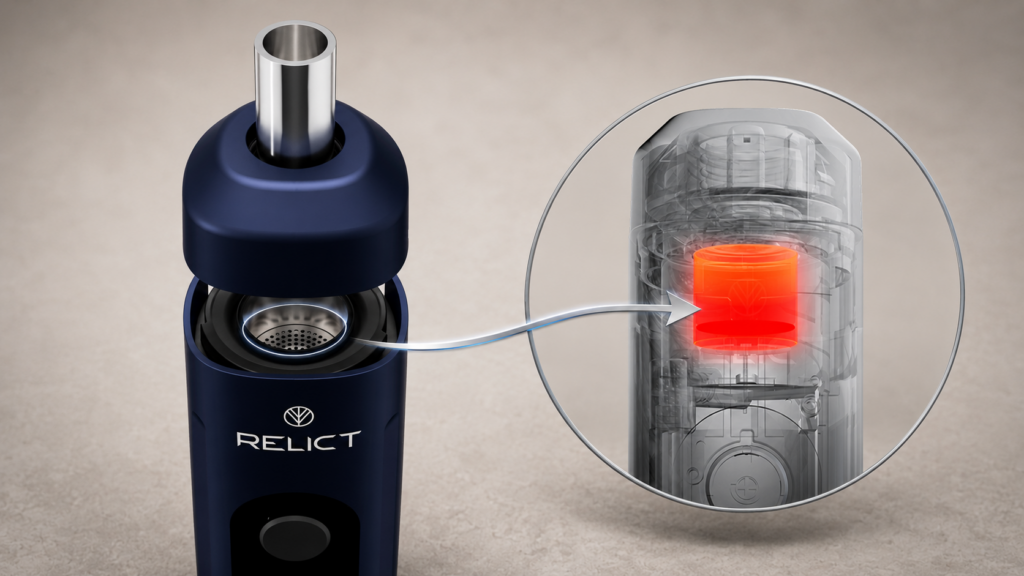
| 👉 The RELiCT conduction vaporizer has a stainless steel chamber and a dual-heating design that keeps heat even, eliminates hot spots, and gives you precise 1°C control from 160°C to 240°C. |

Our Best Sellers
Discover the most popular Norddampf products


How Convection Works
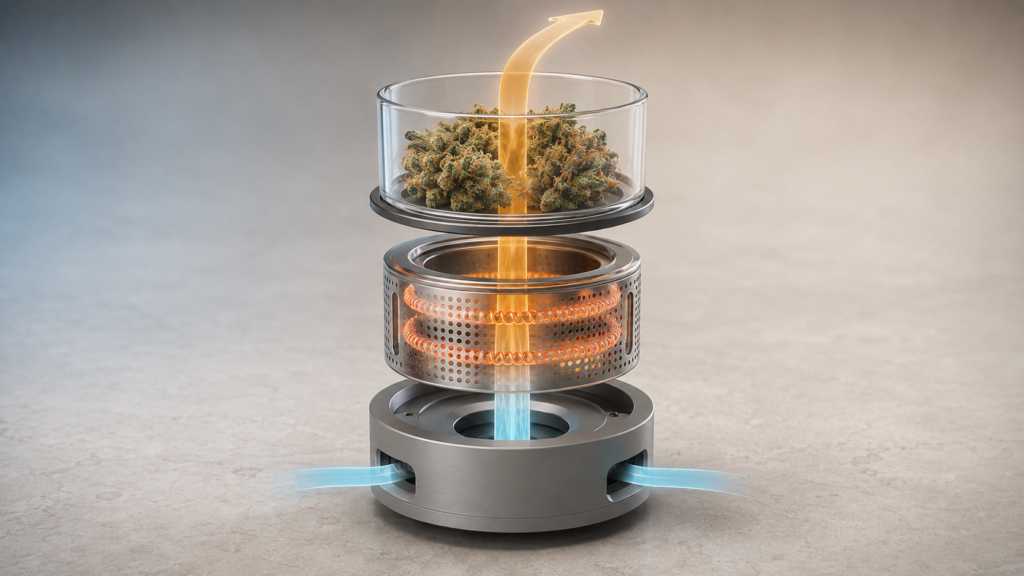
Convection heats the material with moving hot air rather than a hot surface. A separate element warms the incoming air, which then passes through or around the herb, transferring heat without the material ever touching the element directly. It is loosely comparable to an oven's fan, which works the same way, circulating hot air to ensure even cooking.
The benefits are purity and evenness:
Cleaner flavor, since nothing sits on a hot surface to scorch it
Even heating across most of the load, with fewer hot spots than conduction
Better material efficiency, so you get more from each session over time
Precise terpene control, pairing well with a dialed-in temperature profile
Convection heating generally provides clean flavor and even extraction by passing hot air through the material. However, actual heat distribution still depends on airflow, temperature, packing, and device design, and localized hotter areas can occur in some systems, particularly near the hot-air inlet.
The trade-offs, if you could call them that, are time, size, and a slightly steeper learning curve.
The air has to heat up first, so warm-up typically runs 60–90 seconds, and the extra air path usually means a larger device with shorter battery life. Convection is also more sensitive to how you draw and how tightly you pack the chamber, so it rewards a little practice before it clicks.
How Hybrid Heating Works
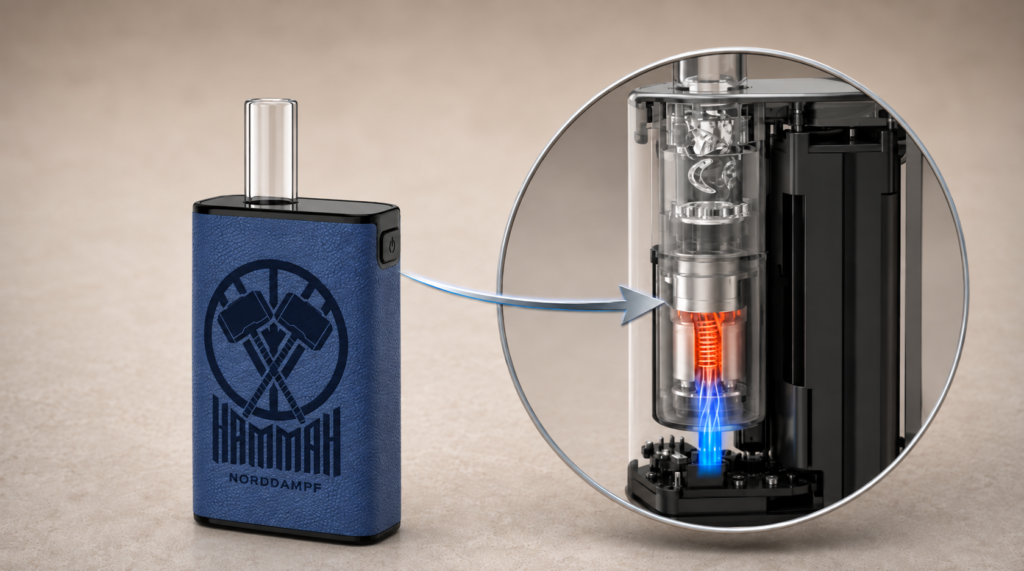
Hybrid heating combines direct chamber heating with heated airflow in one chamber. In most devices, conduction provides a fast warm-up while the convection component works alongside it to even out the heat and finish the extraction, so both heating methods work together rather than one simply handing off to the other.
The result is fast, efficient, and intensive extraction, paired with much of the uniform heating that pure convection is known for.
Its biggest advantage is getting the best of both in one device:
Fast start, using the conduction component to warm up quickly
Even, flavorful finish, as the convection component takes over
Versatile, handling different material types and packing densities more forgivingly
Efficient extraction, getting more from each load
The trade-offs (again, if you can call them that) are complexity and cost. Combining two heating systems adds components and usually drives up the price, and more parts mean more that could eventually need servicing.
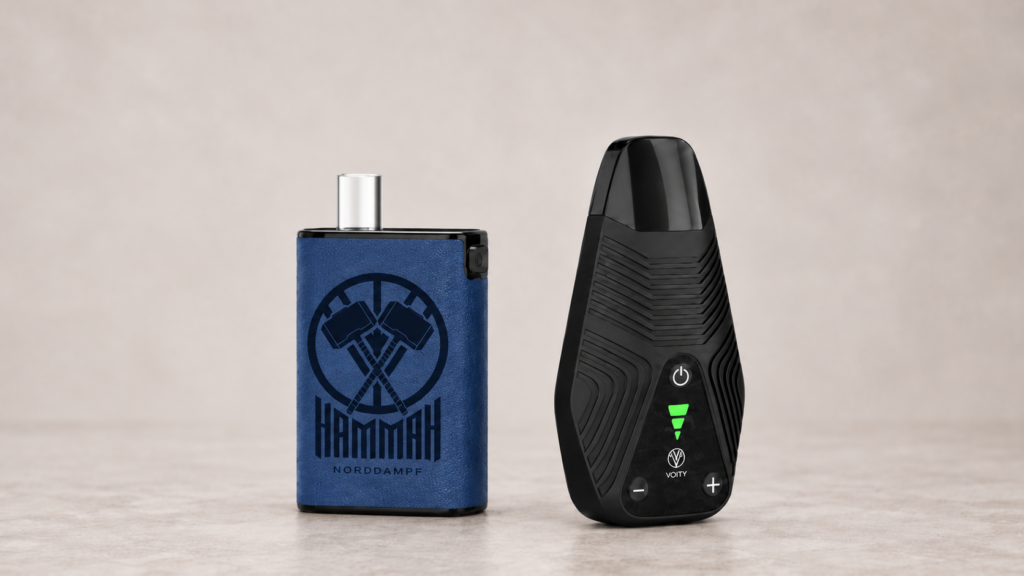
| 👉 Our HAMMAH vaporizer heats up in about 30 seconds, and the VOITY vaporizer heats up in about 30–40 seconds, depending on your chosen temperature, both while still spreading heat evenly across the load. The VOITY also adds infrared heating to its ceramic chamber. |
Conduction vs Hybrid vs Convection Vaporizer Chart
| Criterion | Conduction (RELiCT) | Hybrid (VOITY) | Hybrid (HAMMAH) |
| heating time | 30 seconds | approx. 30–40 seconds (varies by temperature) | 30 seconds |
| Flavor purity | ★★★★★ | ★★★★☆ | ★★★★☆ |
| Vapor density | ★★★★☆ | ★★★☆☆ | ★★★★★ |
| Even heating | ★★★★☆ | ★★★★★ | ★★★★☆ |
| Material efficiency | ★★★★☆ | ★★★★★ | ★★★★★ |
| Battery life | 8-10 sessions | 6–12 sessions (varies by temperature and session length) | 8-10 sessions |
| Portability | ★★★★★ | ★★★★★ | ★★★★★ |
| Learning curve | Easy | Moderate | Moderate |
| Price | €€ (medium) | € (lower) | € (lower) |
Conduction vs Convection: Which Should You Choose?
The right heating method depends on what you want most from a session. You might prefer to get started fast, or chase the purest flavor, or maybe just stretch your material further. Here's how the four most common priorities break down.
Best for Beginners and Portable Users
A conduction device like the RELiCT makes the most sense. Fast heat-up, a flatter learning curve, compact size, and strong battery life suit spontaneous, on-the-go vaping, and the lower price makes it an easier first purchase. You get ready-to-use results without having to master draw speed or packing technique first.
Best for Flavor-Focused Users
Convection or hybrid would be the better fit, since heating the material with air preserves a cleaner terpene profile. If taste purity is your priority and you are happy to wait a little longer for warm-up, this is the direction to look. The HAMMAH's hybrid approach delivers much of that purity without the full convection wait.
Best for Speed and Evenness Both
Hybrid heating is the natural pick here. The HAMMAH or VOITY gives you a conduction-fast start with convection-even extraction in one device, which is the sensible middle path if you don't want to commit fully to either strength.
Best for Efficiency-Minded Users
Hybrid or convection heating extracts more thoroughly from each load, so you use less material over time. That steadier extraction can offset the higher upfront cost across months of regular sessions.
| ℹ️Torn between a conduction vs convection vaporizer? Ultimately, you're really weighing speed against flavor purity. Undecided? Hybrid heating is how you get both in one device. |

Bottom Line
Again, there is no single best heating technology. Conduction wins on speed, compactness, and price, while convection wins on flavor purity and even heating. Hybrid combines the two for users who don't want to compromise.
Ultimately, the right choice is the one that syncs with how you actually vape, whether that's quick sessions on the move, long flavor-led sessions at home, or a bit of both.
👉Ready to choose? Compare the full range of Norddampf vaporizers to find the heating method that fits your routine.
FAQs
What's the Actual Difference Between Conduction and Convection?
Conduction heats the material through direct contact with a hot surface, while convection heats it with hot air flowing through it. Conduction is faster and more compact; convection heats more evenly and tends to give a purer flavor, though it takes longer to warm up.
Is Hybrid Heating Better Than Pure Conduction or Convection?
Not universally, but it is more versatile. Hybrid heating gives you the fast start of conduction and the even, flavorful extraction of convection in one device, which suits users who want both. The tradeoff is a higher price and more complex build, so a pure conduction or convection device can still be the better value if you only care about one strength.
Which Norddampf Device Uses Which Heating Technology?
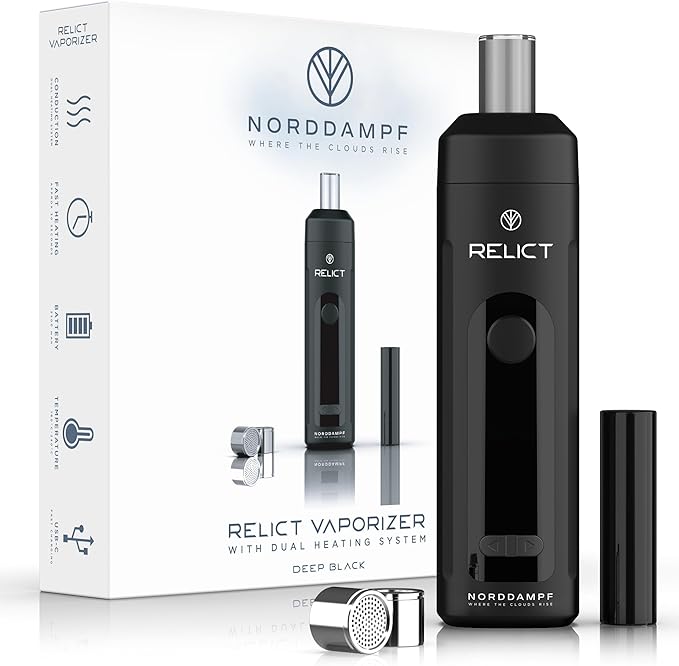
The RELiCT is Norddampf's conduction vaporizer, built around a dual-heated stainless steel chamber. The HAMMAH and VOITY both use hybrid heating, combining direct-contact and hot-air heating in one chamber.
Does Conduction Produce a Worse Taste Than Convection?
Not necessarily, but it can. Because the material sits on a hot surface, conduction can give a slightly toasted note at higher temperatures, especially late in a session or if the chamber is packed too tightly. Starting at a lower temperature, grinding to a medium consistency, and using a well-designed chamber like the RELiCT's all keep the flavor cleaner. A good conduction device considerably narrows the gap with convection.
Why Does My Convection Vaporizer Take Longer to Heat Up?
Because it has to heat the air, not just a surface. A convection device warms a stream of air before it reaches your material, which typically results in a 60–90-second warm-up. Preheating before you pack the chamber is the easiest way to work around the wait.
Is a Conduction vs Convection Vaporizer the Only Choice I Have?
No. While the conduction vs convection vaporizer comparison covers the two core methods, hybrid heating is a third option that combines both. It gives you conduction's fast warm-up alongside convection's even, flavourful extraction, which is why devices like the Hammah and Voity have become such a popular middle ground.
Sources
The Transfer of Heat Energy: https://www.noaa.gov/jetstream/atmosphere/transfer-of-heat-energy
Comparison of Thermal Behaviors: https://pmc.ncbi.nlm.nih.gov/articles/PMC10779859/
Hybrid conduction, convection, and radiation heat transfer simulation: https://www.semanticscholar.org/paper/Hybrid-conduction%2C-convection-and-radiation-heat-in-Peiravi-Alinejad/b8711279665a66760ebc6fbf6a6a724e0c778143